Mushroom Hunting at the Grocery Store
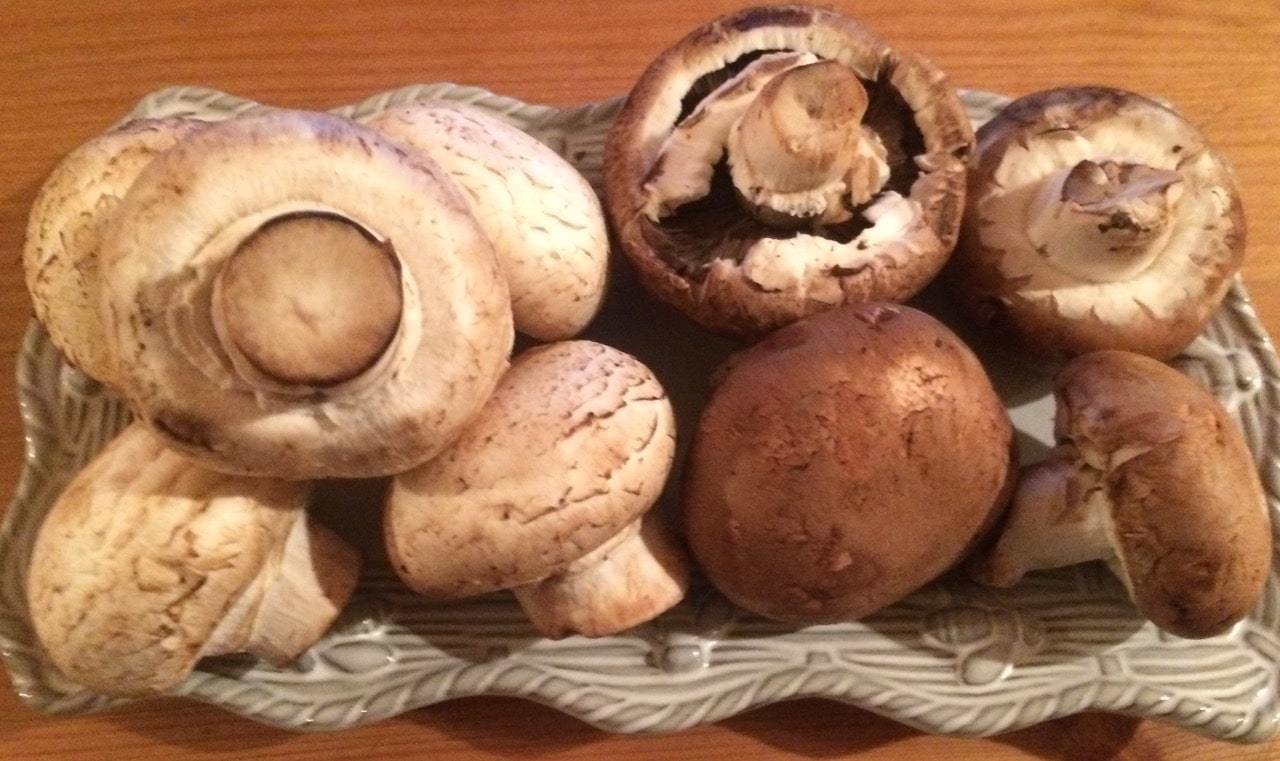
Button Mushrooms
Not everyone’s keen on foraging for wild mushrooms. The reluctance may be due to concerns about accurate identification, a lack of time, living in an area where foraging isn’t possible, or some other reason. If you’re interested in medicinal fungi but unlikely to mushroom hunt, consider foraging in your local market’s produce aisle. When I was a kid in the 70s and 80s, the choice at the average grocery store was limited to the ubiquitous white button mushroom and, maybe, some canned straw mushrooms. Since then, the selection has expanded, and even more so at farmer’s markets.
Aside from the medicinal properties shared here, all are nutritious and tasty additions to your regular diet. Especially if you dry sauté them. For stronger preparations, consider making decoctions, powdered extracts, or—my favorite—double extracts. You can learn how in Christopher Hobbs’ latest book “Medicinal Mushrooms: The Essential Guide”, which also provides dosing information for different preparations.
And now for a few medicinal mushrooms you might find on your grocery store foraging adventure…
Button Mushrooms (Agaricus bisporus)
Yes, these have medicinal properties. Just skip the raw ones folks like to toss in salads—they’re too difficult to digest. They’ve a range of traditional uses, including blood sugar, cholesterol, and blood pressure reduction; easing indigestion; supporting liver health; and improving lactation (1,2). Presumably the same benefits are to be had from crimini and portabella mushrooms, which are actually the same species of button mushrooms.
A study of 1,009 women with breast cancer compared to the same number of cancer-free women revealed that regular consumption of cooked mushrooms—a significant fraction of which were buttons—may even reduce breast cancer incidence (3). Meanwhile, a study in men with recurrent prostate cancer showed that ingesting button mushroom powder improved immune system function and reduced a marker of prostate growth called PSA (4).
Speaking of cancer, you may have heard concerns about a molecule in button mushrooms called agaritine. In some studies, mice developed cancer when fed high, non-physiologically relevant amounts of synthetic agaritine or related chemicals, but multiple other more physiologically relevant studies contradict the findings. To quote a review on mushrooms and agaritine (5): “The available evidence to date suggests that agaritine from consumption of cultivated A. bisporus mushrooms poses no known toxicological risk to healthy humans.” If concerned, reference 6 reports how much agaritine is diminished by various modes of storage and cooking.
Join Marija for Medicinal Mushrooms: Grocery Store Foraging Live Online: September 2024
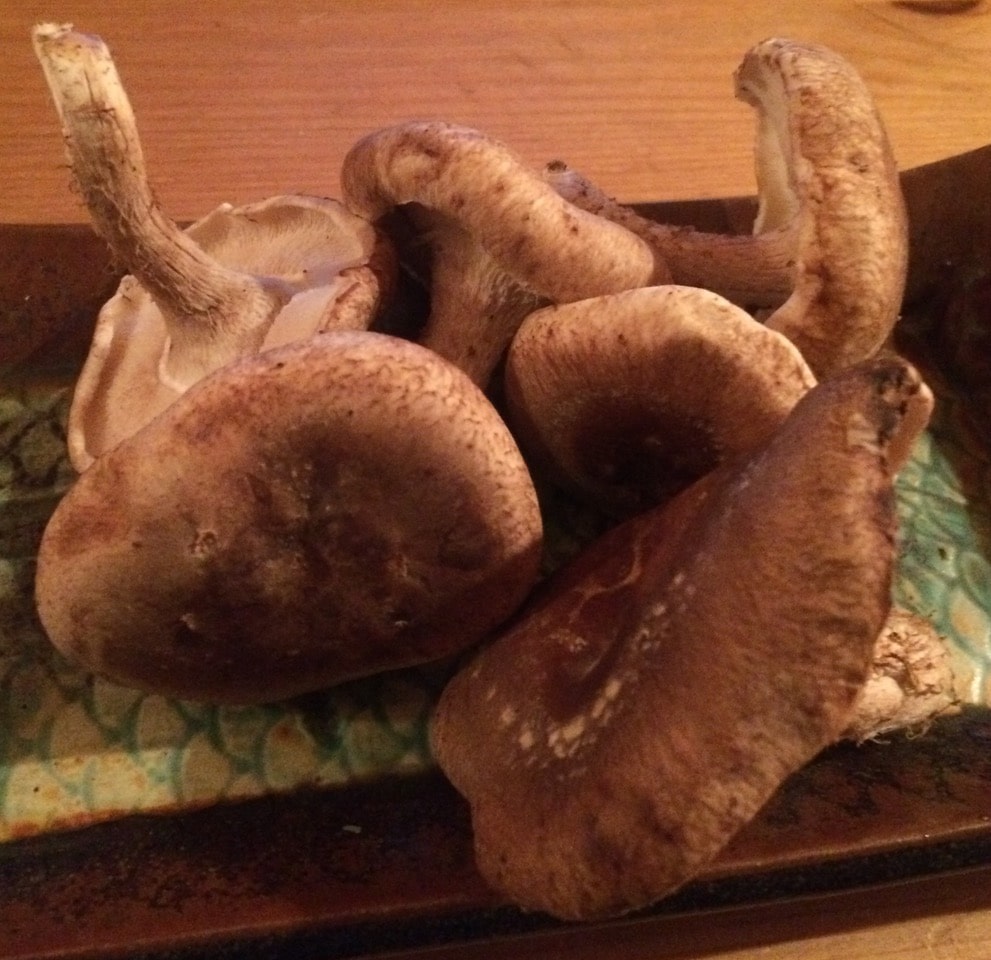
Shiitake Mushrooms
Shiitake (Lentinula edodes)
Shii is a type of tree, and take means “mushroom” in Japan, so shiitake means “a mushroom growing on shii”. Shiitake mushrooms are another common mushroom you might find during your market foraging trip. These valued mushrooms were first cultivated over a thousand years ago in China. Eating shiitake mushrooms regularly may reduce the incidence of breast cancer (3), and a polysaccharide extract called lentinan derived from the mushroom shows benefits for people undergoing chemotherapy when administered in injectable form (7). Shiitake mushrooms are used to support heart, liver, skin, mucus membrane and brain health; for improving immune system function; preventing and dealing with viral and bacterial infections; reducing high blood pressure; lowering cholesterol and blood sugar levels; reducing the risk of blood clots; and a range of other benefits (1,2,7).
My favorite way to use shiitake is in a soup with other immune-supporting ingredients such as garlic and onions. Simply eating shiitake 3-5 times a week is enough to take advantage of the many health promoting benefits of this delicious mushroom.
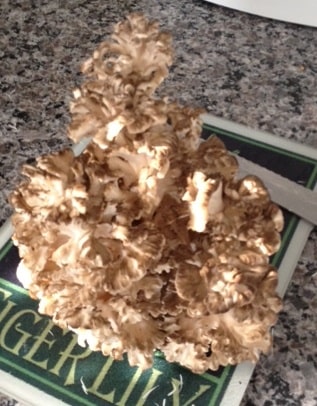
Maitake Mushrooms
Maitake, aka Hen of the Woods (Grifola frondosa)
Mai means “dance” in Japanese, and as mentioned earlier, take means “mushroom”, hence maitake means dancing mushroom. Research has shown a maitake extract called D-fraction to benefit those in treatment for advanced throat cancer and post-menopausal breast cancer (8, 9), while a different type of maitake extract improved fertility in women with polycystic ovarian syndrome (PCOS) who didn’t respond to the standardly used medication, clomid (10). In Japan, maitake is traditionally used for stomach, esophageal, prostate, and breast cancers, and other traditional uses in Asia include boosting immunity, liver and nervous system support, reducing arthritis symptoms, strengthening digestion, and improving blood sugar regulation (1, 7).
My favorite use for maitake is for metabolic disorders in my clients, especially those with PCOS. Like shiitake, eating maitake several times a week can provide a range of benefits.
These are just a few of the mushrooms you might find at your local grocery store. In the “Medicinal Mushrooms: Grocery Store Foraging” class this coming September, we’ll nerd out on additional mushrooms, including oyster and king trumpet (Pleurotus species), enokitake (Flammulina velutipes), and lion’s mane (Hericium erinaceus).
Dr. Anna Marija Helt is an herbalist based in Durango, Colorado. She offers in person and online herbal consultations for health. She can be contacted at Osadha Natural Health for inquiries.
References and Further Reading
- Chen, M-M (2010) Fungi Treasure: Wild Edible Mushroom Collection and Identification. Volume 1. University of California at Berkeley & Jepson Herbaria, Berkeley, CA. https://escholarship.org/uc/item/6cv180g4
- Ying, J, et al (1987) Icons of Medicinal Fungi from China. Science Press. Bejing, China.
- Zhang, M, et al (2008) Dietary intakes of mushrooms and green tea combine to reduce the risk of breast cancer in Chinese women. J. Cancer. 124(6):1404-8. https://onlinelibrary.wiley.com/doi/10.1002/ijc.24047
- Twardowski, P, et al (2015) A phase I trial of mushroom powder in patients with biochemically recurrent prostate cancer: roles of cytokines and myeloid-derived suppressor cells (MDSCs) for Agaricus bisporusinduced PSA responses. Cancer. 121(17):2942-50. https://www.ncbi.nlm.nih.gov/pmc/articles/PMC5685188/
- Roupas, P, et al (2010) Mushrooms and agaritine: A mini-review. Functional Foods. 2(1):91-98. https://www.researchgate.net/publication/248602083_Mushrooms_and_agaritine_A_mini-review
- Schulzova, V, et al (2002) Infuence of storage and household processing on the agaritine content of the cultivated Agaricus mushroom. Food Additives and Contaminants. 19(9):853-62. https://www.researchgate.net/publication/11067593_Influence_of_storage_and_household_processing_on_the_agaritine_content_of_the_cultivated_Agaricus_mushroom
- Hobbs, C (2020) Medicinal Mushrooms: The Essential Guide. Storey Publishing. North Adams, MA.
- Hu, Q and B Xie (2022) Effect of Maitake D-fraction in advanced laryngeal and pharyngeal cancers during concurrent chemoradiotherapy: A randomized clinical Acta Biochim Pol. 7(69):625-32. https://ojs.ptbioch.edu.pl/index.php/abp/article/view/5996/5425
- Deng, G, et al (2009) A phase I/II trial of a polysaccharide extract from Grifola frondosa(Maitake mushroom) in breast cancer patients: immunological effects. J Cancer Res Clin Oncol. 135(9):1215-21. https://www.ncbi.nlm.nih.gov/pmc/articles/PMC3751581/
10. Chen, J-T, et al (2010) Maitake mushroom (Grifola frondosa) extract induces ovulation in patients with polycystic ovary syndrome: a possible monotherapy and a combination therapy after failure with first-line clomiphene citrate. J Altern Complement MEd. 16(12):1295-9. https://www.researchgate.net/publication/47632900_Maitake_Mushroom_Grifola_frondosa_Extract_Induces_Ovulation_in_Patients_with_Polycystic_Ovary_Syndrome_A_Possible_Monotherapy_and_a_Combination_Therapy_After_Failure_with_First-Line_Clomiphene_Citrate
This article is for educational purposes only and is not meant to diagnose or treat a disease, or to supplant the advice of a licensed health care provider.