Building Relationships with Plants
by Christiana Magdalena Hopkinson
How Herbalism Can Be Much More Than Ingesting Plants
Plants, herbs, trees, shrubs, and flowers. We grow them, find them, harvest them, and can make good medicine with what they offer us. They feed us; they help us to feel better and support our bodily systems and wellbeing in countless ways.


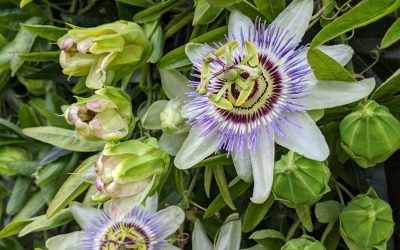
Nopal / Prickly Pear flower and fruits, photo by Christiana Magdalena Hopkinson
Outside of growing, harvesting and creating medicina, I ask, how can we further get to know our plant allies?
One of the first ways I offer is to get to know them where they are already growing. Get curious! Go for a walk and look at plants growing outside of your garden. Get to know the plants that grow around you. You’d be surprised by how many new plant beings there are to get to know.
Not ready to get out of your yard yet? Then get curious about the “weeds” that are growing in your yard and around your home. So many of the people I talk to share that there was a plant that they had no idea was growing around them already. No need to look very far. I find that these plants often have a deeper relationship with us, and it is always worth getting to know them.
While you’re visiting them, think of this in the same way you would visit a friend. Sit with them for a while, listen to the noises that surround them, just be in their presence. No need to harvest or take anything from them, just be with them. What stories are they wanting to share with you about how they grow, what their needs are, what medicine they offer outside of ingesting them?
Sometimes we get caught up only in the reading, harvesting, and creating. There is so much that they offer us in the stillness.
Join Christiana for The 7 Sacred Directions & Plant Allies Series Starting March 2, 2026
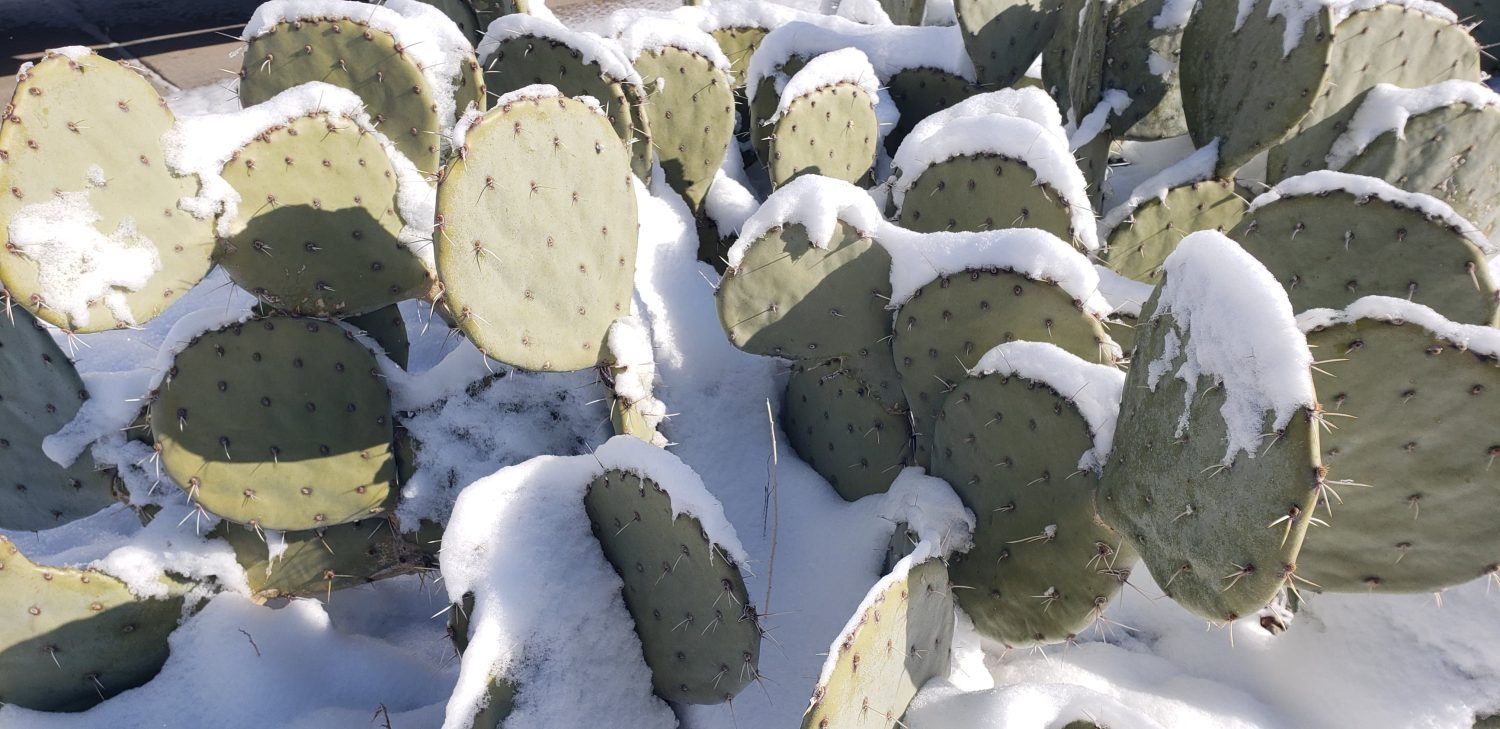
Nopal / Prickly Pear pads in snow, photo by Christiana Magdalena Hopkinson
Another way that I’ve been (recently) connecting more intimately with plants is drawing them! Having this be a part of the Herbalism classes that I walked with Dara, really opened my eyes to how much you connect with a plant when you draw them. It is a bit vulnerable, but I think that’s what makes it so special.
We so often think that these drawings must be “perfect”, but they do not, art is just art. I don’t like thinking that art has to be perfect to be done. And no one ever has to see these drawings but you. When you start to get a closer look at them, layers pull back and you get to see deeper detail of the plant in front of you. As you draw, you start to see the points or curves of the leaf’s edge. The tiny hairs that are present on the leaf and stem. The variation of colors throughout the plant. The arrangement of how the leaves grow on the stem (this can also help you to get better at identifying plants.) These can go right along with your writings of these plants and their uses. Seeing all these tiny details can possibly stir some questions out from under, as well! You may suddenly be wondering why structures look the way they do, and as you ask and learn about these things, that connection grows deeper.
You’d be surprised how much closer you feel to our plant and tree friends by connecting in this way. Suddenly you see them in an entirely different way.


Yarrow leaves and Yerba Mansa flowers, photos by Christiana Magdalena Hopkinson
One of my personal favorite ways of connecting deeper with plants is meditating with them. This can be an incredibly profound and emotional experience. It can be done in a few different ways, and I am sharing the ways that I’ve sat with plants in meditation. I’m sure there are more ways than what I’m sharing here. So, find what works and feels best for you.
- Drink an infusion of the plant that you wish to connect with (making sure that it is safe to do so) and sit in stillness for a time that feels good for you. Asking yourself and writing down (if you want) how the infusion tastes and the flavors that come through for you. Observing the sensations in your mouth; does it feel drier? More wet? Hot? Cooling? Observing the emotions or feelings that are coming up for you, what feels like it’s moving? Observing any visions that come while you are sitting in silence, maybe drawing those down too. Note all of your experiences.
- Sitting in silence with a bit of plant matter; a leaf, flower, seed, etc. While sitting with this part of the plant, again, observing what you are experiencing. This is great with plants that you cannot ingest.
- Sitting in silence envisioning the plant. No parts of the plant are needed! Just like in the above practice, but this time envision the plant in your mind. Noticing and recording your experiences. This is a beautiful way to connect to plants that you may have seen exploring, saw in a dream, are unsafe to ingest or handle, or a large tree.
All of the above practices are just that, practices. You may be able to connect quickly, or it may take a while, but don’t give up! Keep practicing. I’ve found that patience is key in connecting with plants in this way.

Autumn Bosque, photo by Christiana Magdalena Hopkinson
Are you more of a tactile person and find that you like to touch, and see? Well, another wonderful way to connect is by planting them just to watch them grow, not harvesting for a while. I do this in two ways:
- In pots with plants that are introduced/non-native, especially with those that can push out native species. Think Yerba Buena/spearmint (Mentha spicata) or peppermint (Mentha × piperita), mullein (Verbascum thapsus), Lambs ears (Stachys byzantina), Horehound (Marrubium vulgare), etc.
- In the ground with native plants. It’s so important to plant and grow the plants that know this Land and ecosystem better than we ever will.
Either way, I will just let them be and grow for years before ever harvesting. This lets you get up close and personal with their needs, their growth cycle, how fast they grow, and if you’ve only ever worked with them dried, you get to experience them fresh and alive! If you choose to do this, you can then practice all of the above ways of connecting: sitting with them, drawing them, and meditating with them. When you plant a seedling that you get from a local nursery or grow yourself from seed, it is such a blessing. You grow with them.
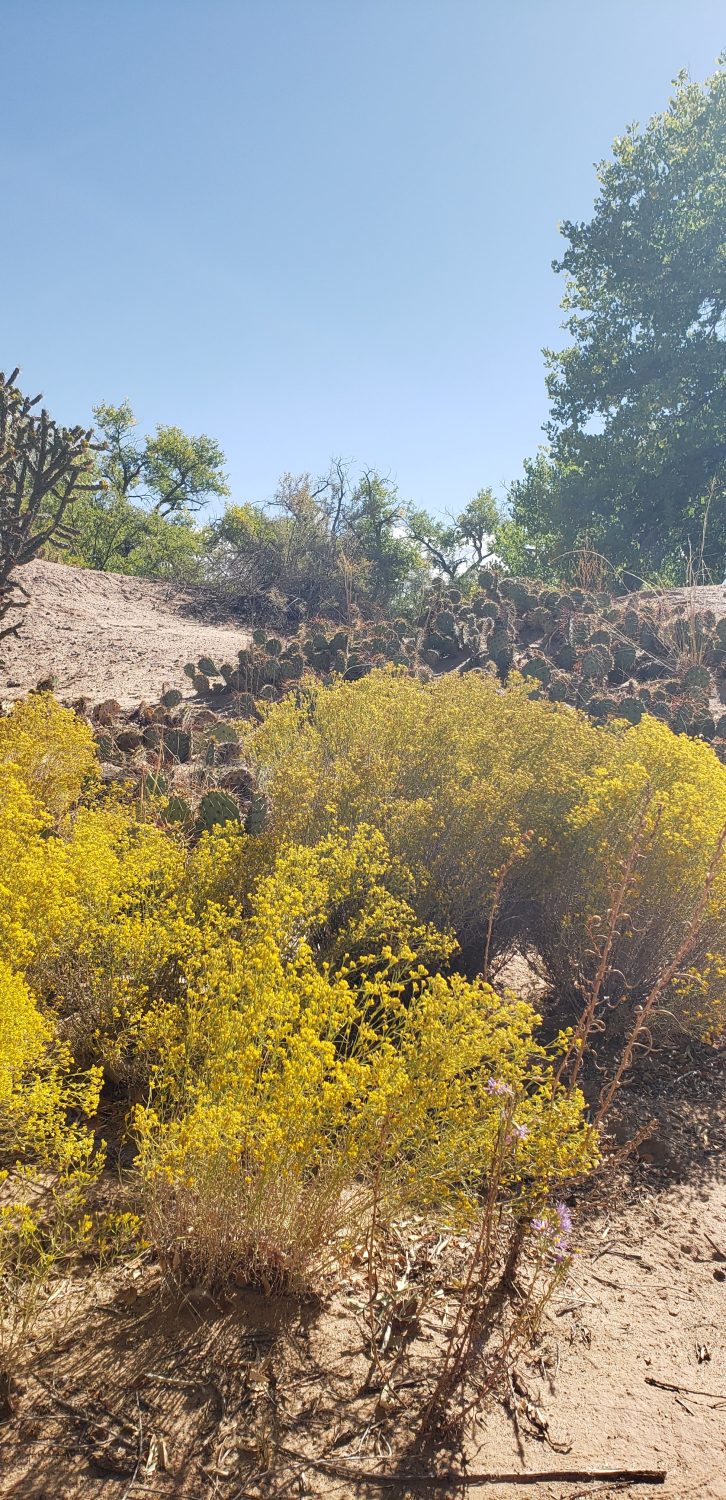
Snakeweed and Nopal, photo by Christiana Magdalena Hopkinson
Lastly, there is the lifelong practice of observing their lifecycle and offerings with the seasons/sacred Directions. In my Ancestral practices, the seasons are associated with certain Directions and each of them has certain associations and teachings, (I will be co-teaching a course about this in 2026, with ABQ Herbalism find more info here 7 Sacred Directions & Plant Allies | Albuquerque Herbalism. ) This can be with different plants during different seasons, or one plant through all four seasons. Pulling in all the above ways, and more, to build relationships and connect with our plant allies each season.
In this way you connect with what the plants are offering, teaching, and showing you from season to season and even year to year. With the changes in climate that we are facing, many plants are showing us how they are adapting, and we can learn a lot from that, if we are willing to listen.
“Like scientific information, traditional knowledge arises from careful systematic observation of nature, from the results of innumerable lived experiments. Traditional knowledge is rooted in intimacy with a local landscape where the land itself is the teacher…Plant knowledge also comes from the plants themselves. To the attentive observer, plants revel their gifts” – Robin Wall Kimmerer, Gathering Moss: A Natural and Cultural History of Mosses.
Christiana is the Creatrix of Obsidian Hummingbird Wellness. Follow her on social media @obsidian_hummingbird to stay up to date with they offer. Want to work 1-on-1 with her? Book a session at ObsidianHummingbirdWellness.com.
This article is for educational purposes only and is not meant to diagnose or treat a disease, or to supplant the advice of a licensed health care provider.