
The Versatile Mulberry
From Ancient Traditions to Modern ‘Invasions’
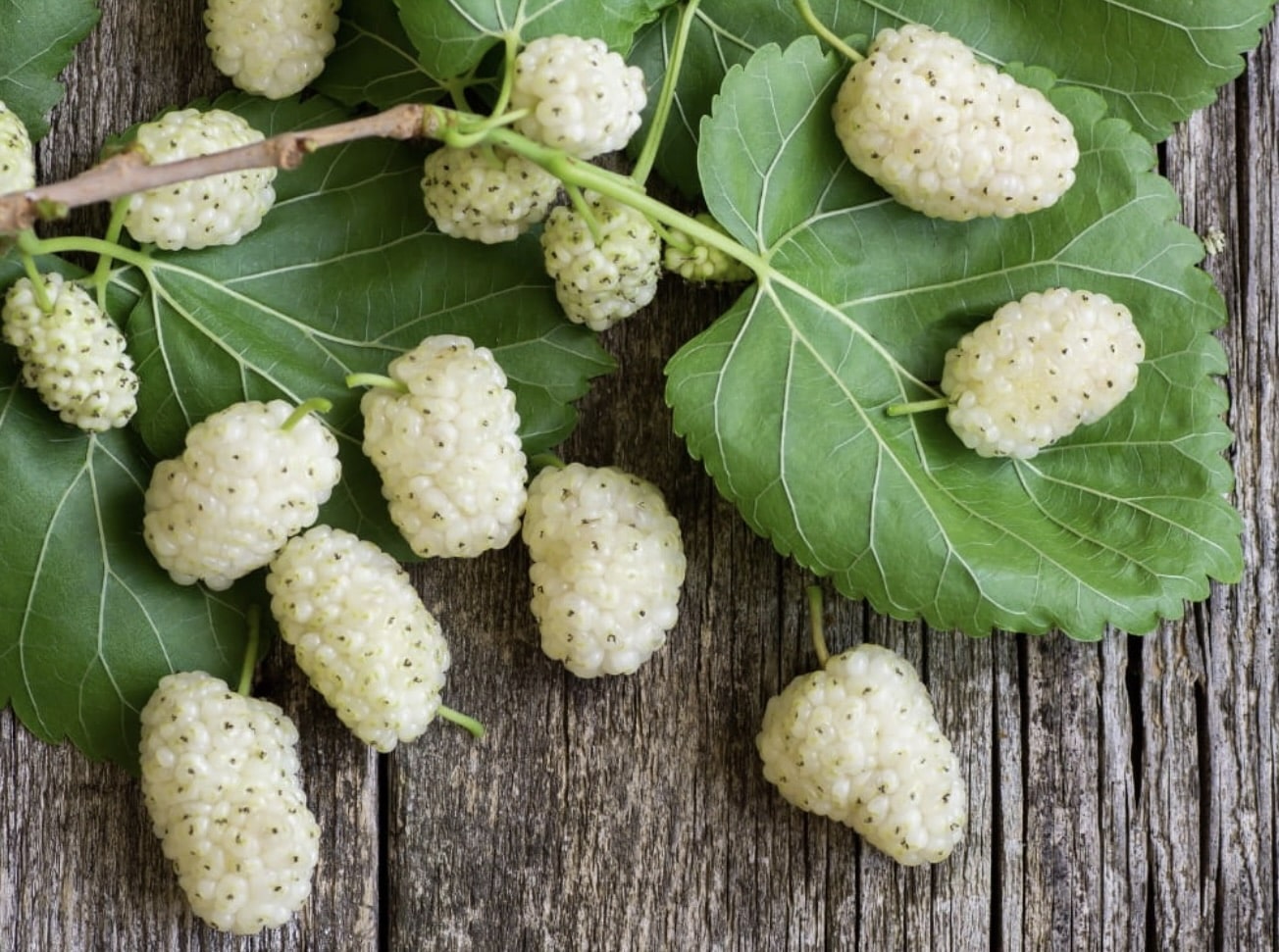
The mulberry plant, belonging to the genus Morus, stands as a testament to nature’s adaptability and human ingenuity. This deciduous tree, with its sweet fruit, has woven itself into the fabric of various cultures and landscapes across the globe, particularly in North America, South Asia, and West Asia. In New Mexico, mulberries have an international and local imprint, as some varieties are native and others are introduced counterparts. Nevertheless, all varieties offer medicinal and ecological gifts. Let’s familiarize ourselves with some mulberry varieties and get to know both the species native to New Mexico and the ones who’ve ‘invaded’ the terrain.
Invasive species are, in general, a controversial topic. Many people adhere to the ideology that, at their core, invasive species themselves are bad and problematic. This simplifies the conversation wholeheartedly, as plants considered invasive have largely been introduced by humans to ecosystems where the humans themselves have created the imbalance that the invasives thrive in. Until humans learn to listen to one another and the earth – to respect and follow the lead of indigenous and nomadic peoples who have historically stewarded land – the issue of invasive species will continue. Fortunately, the plants themselves are adept at listening deeply and contributing to the needs of both the lands they inhabit and the beings who live alongside them. In addition to exploring the gifts of the New Mexico native mulberry species, we will get to know the historical, medicinal, and ecological impact of other mulberry species from around the globe, including the species considered invasive to New Mexico.
The Mulberry Family Tree: Varieties and Their Homes
- White Mulberry (Morus alba): With roots in China, the white mulberry’s leaves are famous for feeding silkworms. Its fruits aren’t always white; they can range from white to dark purple. This species has been a global traveler, thanks to the silk trade.
- Black Mulberry (M. nigra): Native to Western Asia, it’s renowned for its rich, flavorful fruit, often consumed fresh or used in jams and wines. Historically, it was brought to Europe by the Romans for cultivation.
- Indian Mulberry (M. indica): Prevalent in India, this species is cherished for its medicinal properties in Ayurvedic medicine, where it’s used to treat various ailments from diabetes to heart conditions.
- Korean Mulberry (Morus australis): Less known in the West, this species thrives in Korea and parts of Japan, known for its sweet, juicy berries and its use in traditional Korean medicine.
- Himalayan Mulberry (M. laevigata): Native to the Himalayan region, this mulberry offers large fruits and has been used in traditional medicine for its antioxidant properties.
- American or Red Mulberry (M. rubra): Indigenous to North America, particularly from the east coast to the Great Plains, this species has a deep cultural history with some Native American tribes. Though less common now due to hybridization with white mulberry, the red mulberry once flourished across New Mexico.
- Littleleaf Mulberry (Morus microphylla): This species, native to parts of the Southwestern United States including New Mexico, is less known but equally significant in its ecological niche. Its smaller leaves and bushy stature help it thrive in the arid landscapes of New Mexico.
Join Jennileen’s next live online Albuquerque Herbalism class:
Invasive Plant Medicine: A Continuing Conversation, October 2025
Cultural and Medicinal History
Indian Mulberry (Morus indica) is referred to as Shahtoot in Hindi and is integral to Ayurvedic medicine. Ripe shahtoot is considered to be cooling, nourishing, beneficial for heart health, and an overall body strengthener. A go-to for dehydration, the fresh water-filled fruit cures burning sensations, fevers, tuberculosis, and diseases that originate in the blood. Unripe shahtoot helps digestion. Its taste is sour and stimulates sluggish digestion, softens stool, and assists with healthy elimination.
White Mulberry (Morus alba) hails from East Asia but is the overall global dominant species. Its leaves have been documented in ancient Chinese medical texts like the “Shennong Ben Cao Jing,” where they’re praised for their cooling properties, ability to calm the liver, and as eye support. When sipped as tea or ingested in other forms, the leaf is believed to expel wind-heat from the body, which, in the poetic terms of Traditional Chinese Medicine, means it helps with fevers, coughs, and even red eyes from too much screen time.
West Asia, including Persia (now Iran), has a rich tradition with mulberries. Here, Shahtoot or Persian Red Mulberries (Morus nigra) are a delicacy, often dried and used in cooking or eaten fresh in spring, to help cleanse and renew the body and spirit. Persian literature and cuisine are replete with references to mulberries, indicating their cultural significance.
In North America, the Red Mulberry (Morus rubra) has a long-standing relationship with many indigenous peoples. The Cherokee, for instance, have a history of making sweet dumplings by mixing mulberries with cornmeal and sugar, while members of the Iroquois nation have mashed the fresh fruit and made them into small cakes to dry, for later use. Dried cakes are soaked in warm water and added to sauces or mixed with cornbread.
Native Mulberry Species in New Mexico
Both mulberry species (Morus microphylla – Littleleaf Mulberry – Morus rubra – Red Mulberry) native to New Mexico have played a role in local ecosystems by providing habitat and food for wildlife, including birds and mammals.
Littleleaf Mulberry (Morus microphylla) has a longstanding relationship with the Apache peoples, specifically the Chiricahua & Mescalero. The berries are traditionally eaten fresh as well as made into pulpy cakes to be dried and used at a later date. The Mescalero considered Littleleaf Mulberry wood as the best material for making war bows.
Red Mulberry (Morus rubra) is less common now due to hybridization with White Mulberry but once flourished across New Mexico. The fresh fruit is traditionally prized among the Comanche.

White Mulberry (Morus alba): The Invader in New Mexico
The White Mulberry was introduced to the New Mexican landscape in the early 19th century by settlers looking to kickstart a silk industry. However, the silk dream was short-lived, but the mulberry? Not so much. Morus alba has a knack for thriving where others might not, thanks to its tolerance for various soil conditions and its prolific seed dispersal, often by birds who love the fruit. These trees have flourished in areas like the Rio Grande Valley where the floodplain is now largely non-existent, thanks to human intervention. This has allowed drought tolerant Morus alba to outcompete native species, specifically Morus rubra, leading to its classification as an invasive species. Planting Morus alba in Albuquerque is banned as per city ordinance.
Still, you’ll find Morus alba lining roadsides, in Albuquerque and other New Mexico urban areas, and even in the wild, where it has managed to establish itself quite comfortably. Despite being invasive, these trees provide a food source for wildlife and have been adopted into local foraging cultures. They’ve also become part of the landscape in New Mexico urban areas, where they offer shade and improve air quality. The ability of these invasive species to grow in disturbed and urban environments has led to their use in soil stabilization projects and as a quick-growing shade tree.
We can try to remediate Morus alba but unless we address the reasons for its success, the species will continue to thrive. Contemporary land management practices have superseded true relational land stewardship, importing ideologies as well as seeds to unfamiliar landscapes. Accurate and beneficial information about best land practices can be ascertained by looking to the leadership and knowledge of indigenous and nomadic peoples who have successfully ‘managed’ land since time immemorial. Until this happens, we will continue to live with flourishing invasive species. Fortunately or unfortunately, the silver lining is that New Mexico is replete with people who suffer from the exact ailments that Morus alba can help cure.
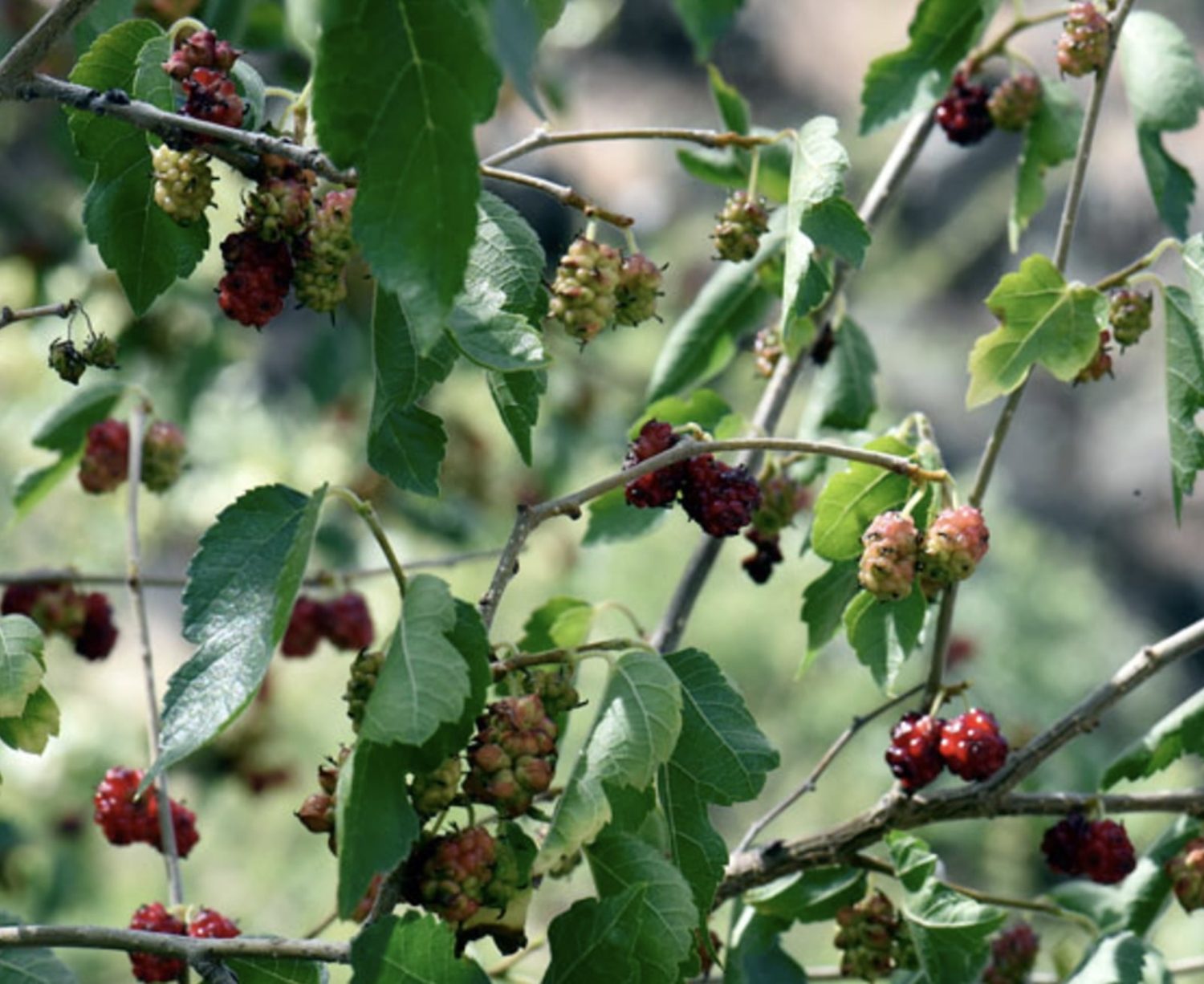
Here’s a small list of the medicinal benefits of our invasive White Mulberry (Morus alba). Keep in mind this list is inclusive of the hybridized mulberry trees whose fruits run the gamut of white to red to dark purple:
- Diabetes Management: Morus alba leaves have been spotlighted for their potential in diabetes control. The compound 1-deoxynojirimycin (DNJ) found in the leaves inhibits the breakdown of carbohydrates in the gut, reducing sugar spikes. Traditional use in Ayurveda and Chinese medicine for this purpose has now been backed by scientific studies, indicating mulberry leaf’s role in managing blood sugar levels.
- Cardiovascular Health: The fruits and leaves of mulberries are rich in antioxidants, including resveratrol and anthocyanins, which are known for their heart-protective effects. Reducing oxidative stress and improving blood circulation, mulberries could contribute to cardiovascular health, a benefit recognized in Ayurvedic texts and supported by emerging research.
- Anti-inflammatory Properties: Mulberry leaves show promise in reducing inflammation, potentially beneficial for conditions like arthritis. Studies on extracts have shown they can inhibit inflammatory pathways, a finding that aligns with traditional uses of mulberry in reducing inflammation.
- Weight Management: There’s interest in mulberries for weight control due to their fiber content, which can help in feeling full longer, thus potentially reducing overall calorie intake. This aspect, while more anecdotal, supports the plant’s holistic health benefits.
Conclusion
Mulberries, across their species, represent a blend of utility, cultural heritage, and ecological complexity. From countries like China, Korea, India, Iran, and the continental U.S., mulberries have not only shaped cuisines but also medicine, folklore, and landscapes. While the introduction of invasive species poses challenges and calls for deeper conversations around what it means to truly steward land, it also underscores mulberry’s resilience and adaptability. The mulberry species, as with all plants, invite us to talk about environmental management and relational land stewardship, while at the same time encouraging humans to appreciate nature’s ability to create beauty and abundance in spaces that have been depleted by human error.
Jennileen Joseph is a clinical herbalist at Satimos Holistic Health. Follow her on social media @sastimosholistichealth to get up to date information on course offerings, as well as to book a plant medicine consult or purchase a custom herbal formula.
References
https://medium.com/@yairdanon/the-morus-alba-as-a-traditional-chinese-medicine-9392508f2b66
Mulberry leaf (Morus Alba), China, and Traditional Chinese Medicine
https://www.sciencedirect.com/science/article/abs/pii/S1043661821006137
Mulberry leaf (Morus Alba), China, and Traditional Chinese Medicine
https://trace.tennessee.edu/cgi/viewcontent.cgi?article=2261&context=utk_gradthes
Cherokee medicinal plants: a history (including Morus rubra page 48)
Moerman, Daniel E. 1998. Native American Ethnobotany. Timber Press, Portland, Oregon.
Plethora of Morus alba and Morus microphylla tidbits (page 350) and beyond
https://www.baltimoreorchardproject.org/stories/forgottenfruit
White and Red mulberry and their respective histories
https://www.inaturalist.org/taxa/54801-Morus-rubra
Red mulberry native range
https://chineseacupunctureclinic.com/the-mulberry-tree-in-chinese-herbology/
White mulberry china
https://www.nccih.nih.gov/health/white-mulberry-leaf
Morus alba leaf study
https://pmc.ncbi.nlm.nih.gov/articles/PMC6130672/
Morus alba leaf study
https://pmc.ncbi.nlm.nih.gov/articles/PMC3924983/
Studies on Chinese use and efficacy of mulberry
https://www.britannica.com/plant/mulberry-plant#ref235777
Array of mulberry colors and a little who’s who of them: black, white, red
https://pmc.ncbi.nlm.nih.gov/articles/PMC10244279/
Morus alba in depth science
More in depth about the many mulberry varieties and ayurveda’s relationship to mulberry
https://www.unanijournal.com/articles/132/4-2-9-248.pdf
Morus indica shahtoot in depth science about properties etc
http://www.mypersiankitchen.com/shahtoot-persian-red-mulberries/
Persian love for ‘toot’ white mulberry
https://www.zizira.com/blogs/plants/7-wonderful-health-benefits-mulberry-fruit-shahtoot
Shahtoot health benefits
https://pmc.ncbi.nlm.nih.gov/articles/PMC6358891/
All morus species and their general medicinal properties, as well as some specifics for each species (albus, nigra, rubra, indica) and a little history.
Native american history with mulberry
https://www.fs.usda.gov/rm/pubs_series/wo/wo_ah727/wo_ah727_728_732.pdf
More about science of mulberry including the mulberries indigenous to the US (littleleaf mulberry and red mulberry)
Littleleaf mulberry
https://www.fs.usda.gov/database/feis/plants/tree/moralb/all.html
Morus alba and new mexico


