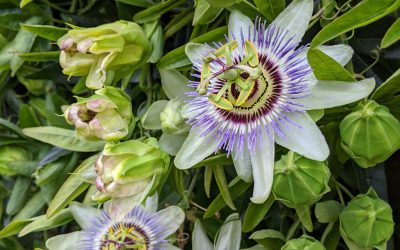
Can Wine Be Medicine?
by Brook Brooks
Do you sell your wine? is often the first question people ask me when I tell them I grow grapes and make wine. Although wine is predominantly understood in American culture through a commercial or market lens, I’ve had teachers show me it’s possible to engage with winemaking as a creative practice and wine as community medicine.
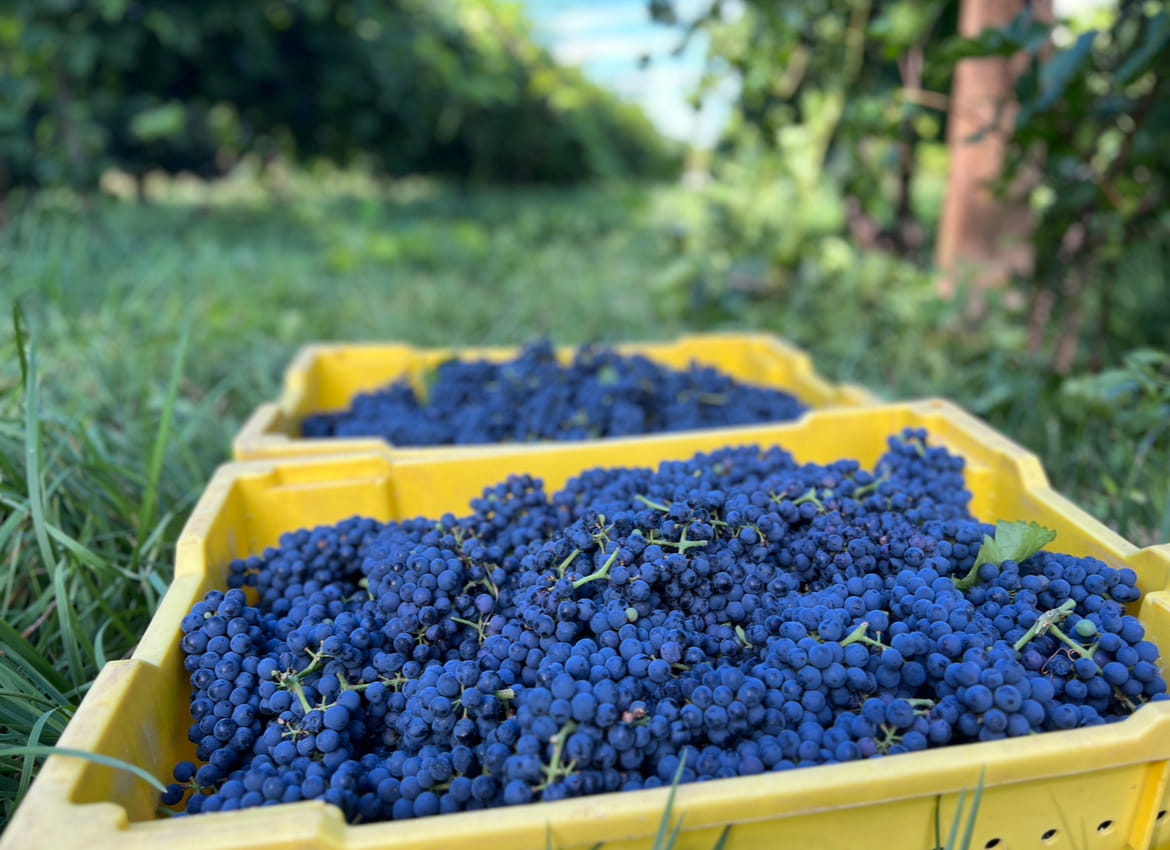
The author’s first grape harvest in the fall of 2023
During my last summer at university, I took an organic gardening class. My friend and I shared a 10×10’ plot where seemingly overnight, we had a bounty of eggplants. And so we sought out counsel from the library’s cookbook section and began teaching ourselves how to cook eggplant, a vegetable I barely encountered before tending this garden, but fell in love with as we salted and pressed and fried and baked them.
This brief experience farming and learning how to manage seasonal abundance inspired me to scrape together my tips from waitressing during this last summer of college and book a one-way flight in the fall of 2002 to Italy. Across three seasons, I volunteered on six organic and biodynamic farms, in exchange for food and housing through the organization WWOOF, World Wide Opportunities on Organic Farms.
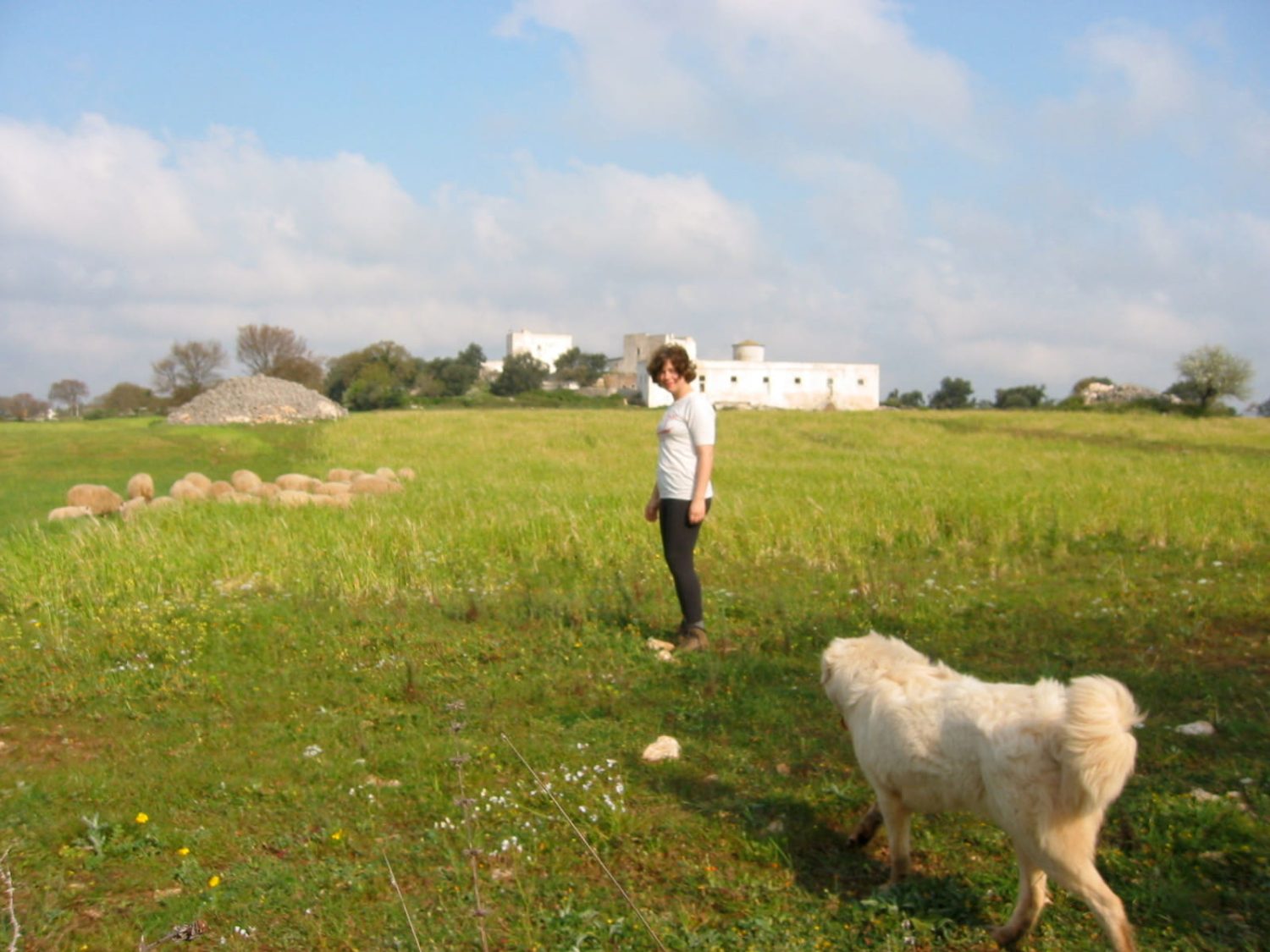
The author working as a shepherd in Southern Italy in the Spring of 2003
I met my first medicine teachers in Italy on these farms. Women who loved to forage for mushrooms, asparagus, and fennel. Who taught me to do the same and, in this way, how to operate outside of industrial food systems. It was here with these teachers where I learned how to cook, and how to eat for pleasure and nourishment, and they taught me how, when, and why to drink wine.
These women knew about herbal and homeopathic medicine and used this knowledge to care for their community. They also knew that if they taped a salted plum to my belly button, it would ease my tremendous car sickness.
I arrived in Italy with chronic health problems accumulated from a childhood haunted by poor nutrition—ultra-processed and fast foods were often the only foods my family could afford or had the knowledge and time to prepare. Irregular cycles, acne, anxiety, fatigue, and major dental issues plagued me. I left Italy with regular cycles for the first time in my life and a map for how I could heal my body.
Sharing home-cooked meals together with friends and family is woven into daily Italian life. During dinners that would unfold across hours, we would talk and laugh, and sip homemade wine, always in moderation and always with food. And then inevitably, hours into this joyful convening, the host would abscond into a basement or open a cabinet and pull out something special. A homemade digestivo or medicinal amaro made from plants foraged in the mountains.
My first teachers, Raffaella and Francesca, initiated me into a food-and-wine-as-community-medicine lineage that continues to anchor my practice. I learned the move in Italy is you keep the best food and wine medicine you make for your friends, your family, and your community. The first question an Italian would ask a person who grows grapes and makes wine would never be: do you sell your wine? It would be: when can we share a bottle?
Without generational wealth, without land, and without a financial and familial safety net, I understood full-time farming was not a path I could walk, but knew I wanted to stay close to that work. I returned from Italy and got a day job running an arts program at a rural farm-based residential mental health program in the foothills of Appalachia. I foraged for and pickled daylilies in my free time. I learned how to ferment cabbage. I grew kitchen herbs in my windowsill.
In September 2022, exactly 20 years after starting my first season farming in Italy, and not long after turning 41, Covid finally caught up with me. I was laid up in bed for days fantasizing about all the fruits and vegetables I wanted to gather and ferment when I was feeling stronger.
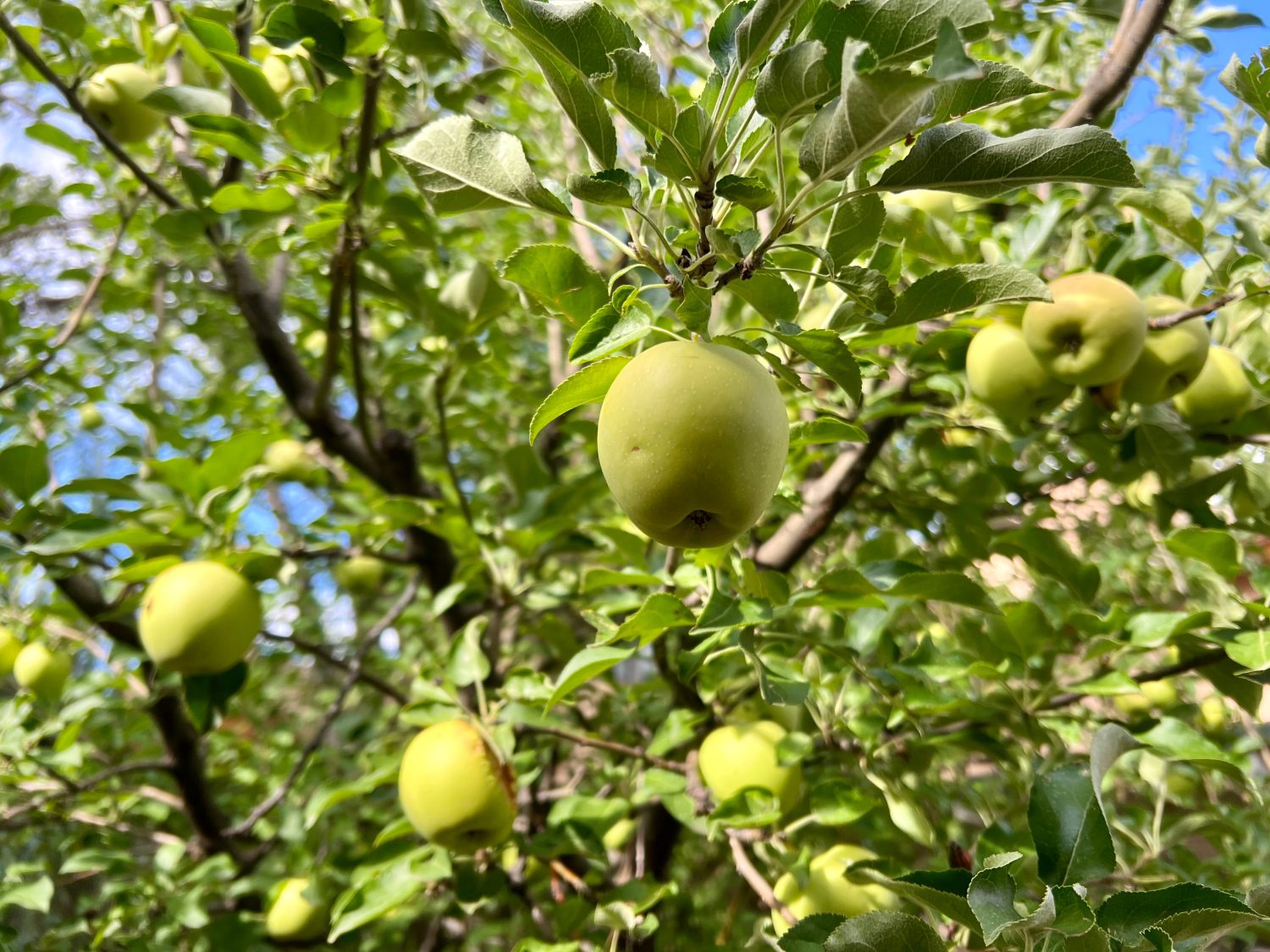
The apple tree in the author’s backyard that became the source for their first homemade wine
From my bed, I watched as the branches of an apple tree in my yard started to break from the weight of the neon green orbs. Determined, I got out of bed one morning when I was feeling a little better and harvested eighty pounds of apples from that tree, in part to keep its branches from breaking. And in part because after two decades of fermenting everything, I had never tried to make wine.
The harvest of that single tree took all the energy I had and so I placed the apples in boxes on my porch and then the next day began the daylong work of breaking them down into a mash with basic kitchen equipment: a paring knife and a blender.

Apples ready to be made into wine
I tended this aerobic ferment for a week or so, watching it come alive with microbial life. Fungi like Saccharomyces cerevisiae and Hanseniaspora uvarum were throwing their own harvest party—eating the sugar of the apples, budding to reproduce, and breathing out carbon dioxide and generating heat in the process. I tasted the brew every day and felt myself step into a 10,000-year-old lineage of collaborating with fungi to transform fruit into something medicinal, nourishing, and euphoria-inducing.
After tucking the apple wine into carboys fitted with airlocks so it could continue its second anaerobic fermentation, I started buying seconds from the farmers’ market of anything that looked like it had potential sugar to become wine. By the end of the season, when the first frost settled in around mid-October, I had 50 gallons of wine in my living room. A dozen or so airlocked carboys bubbled with apple, peach, grape, and nectarine wine. After that fall’s harvest was complete, I knew I wanted to do and know more.

A few of the wines from the fall of 2022 starting their second fermentation
I joined a local non-profit organized around the appreciation of New Mexico wines and vines, and I met a mentor there, Tom Dixon who founded Green Tractor Farm with his wife Mary Dixon, who invited me to work alongside him in his vineyard the following growing season. I also enrolled in the virtual winemaking certificate offered by UC Davis.
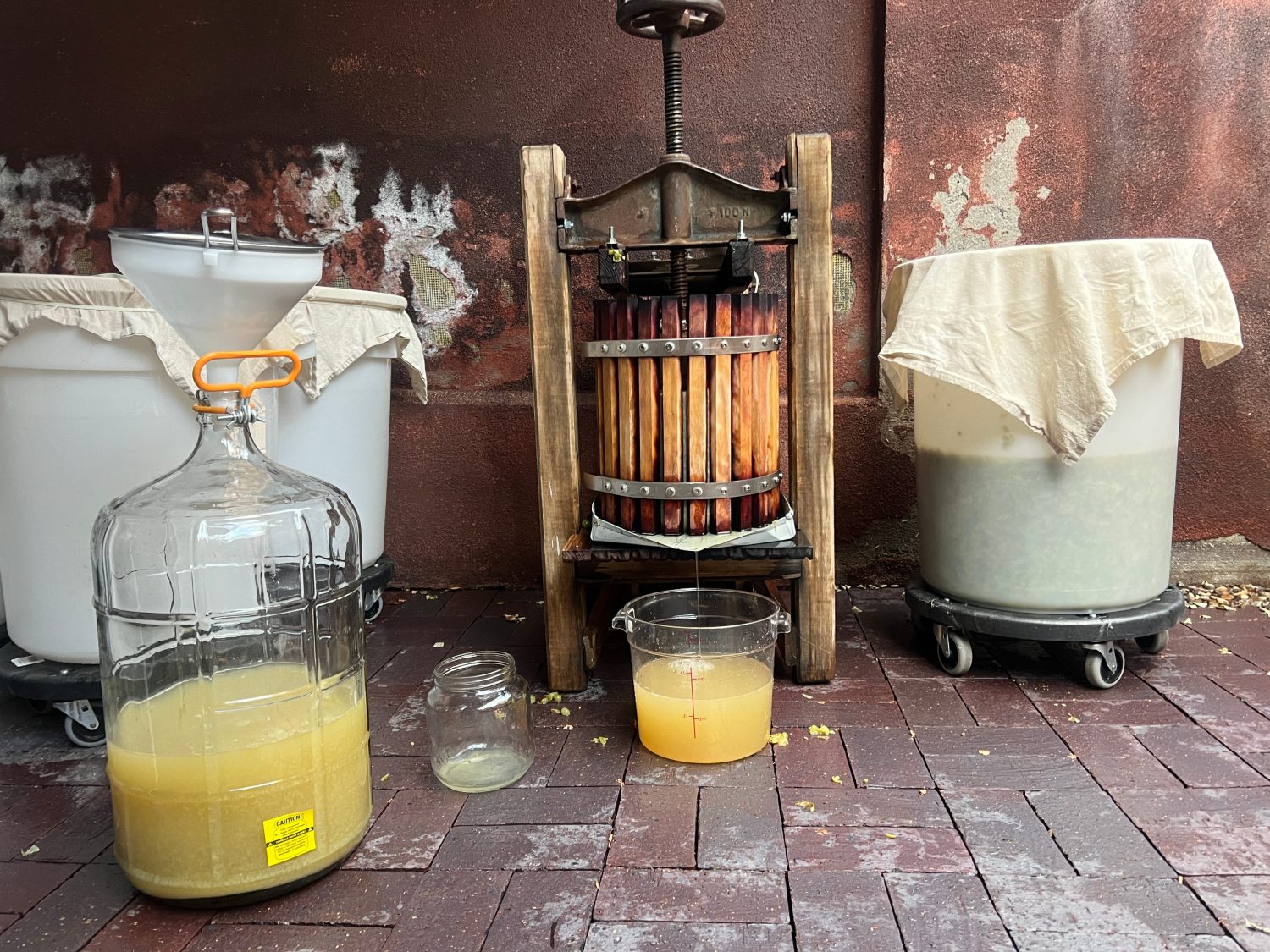
A basket press on loan from Brook’s mentor Tom currently functions as their low-tech backyard winemaking setup
That following spring, I opened the apple wine and couldn’t believe how good it tasted. I called it Beginner’s Luck, and I invited my friends and family to a mid-summer party where we opened a case of it and enjoyed it with food, live music, and dancing.
Most of the wine I made that first season was not so great and so I taught myself how to transform it again, this time in collaboration with the bacterium Acetobacter aceti, into vinegar. Through this aerobic fermentation, the faults in the wine disappeared and a different medicine emerged that I infused with garlic, chokecherries, sumac, nettles, clary sage, and rose petals. These infused medicinal vinegars became salad dressings, braises, and with a little honey, they became oxymels I would pour by the tablespoon into a glass, top off with sparkling water and ice, and enjoy as a nourishing afternoon mocktail.

Infusing homemade vinegar with medicinal fruits and herbs
Something that’s magical to me about grapevines is the range of nourishment and medicines they create: grape leaves rolled into dolmas, unripe grapes made into verjus, ripe grapes devoured as food and crushed into wine. Wine transformed into brandy or into vinegar, honey added to vinegar to make an oxymel. Grapevines woven into wreaths to celebrate and into baskets to gather next year’s harvest.
Most of the wine I made that first season was not so great and so I taught myself how to transform it again, this time in collaboration with the bacterium Acetobacter aceti, into vinegar. Through this aerobic fermentation, the faults in the wine disappeared and a different medicine emerged that I infused with garlic, chokecherries, sumac, nettles, clary sage, and rose petals. These infused medicinal vinegars became salad dressings, braises, and with a little honey, they became oxymels I would pour by the tablespoon into a glass, top off with sparkling water and ice, and enjoy as a nourishing afternoon mocktail.
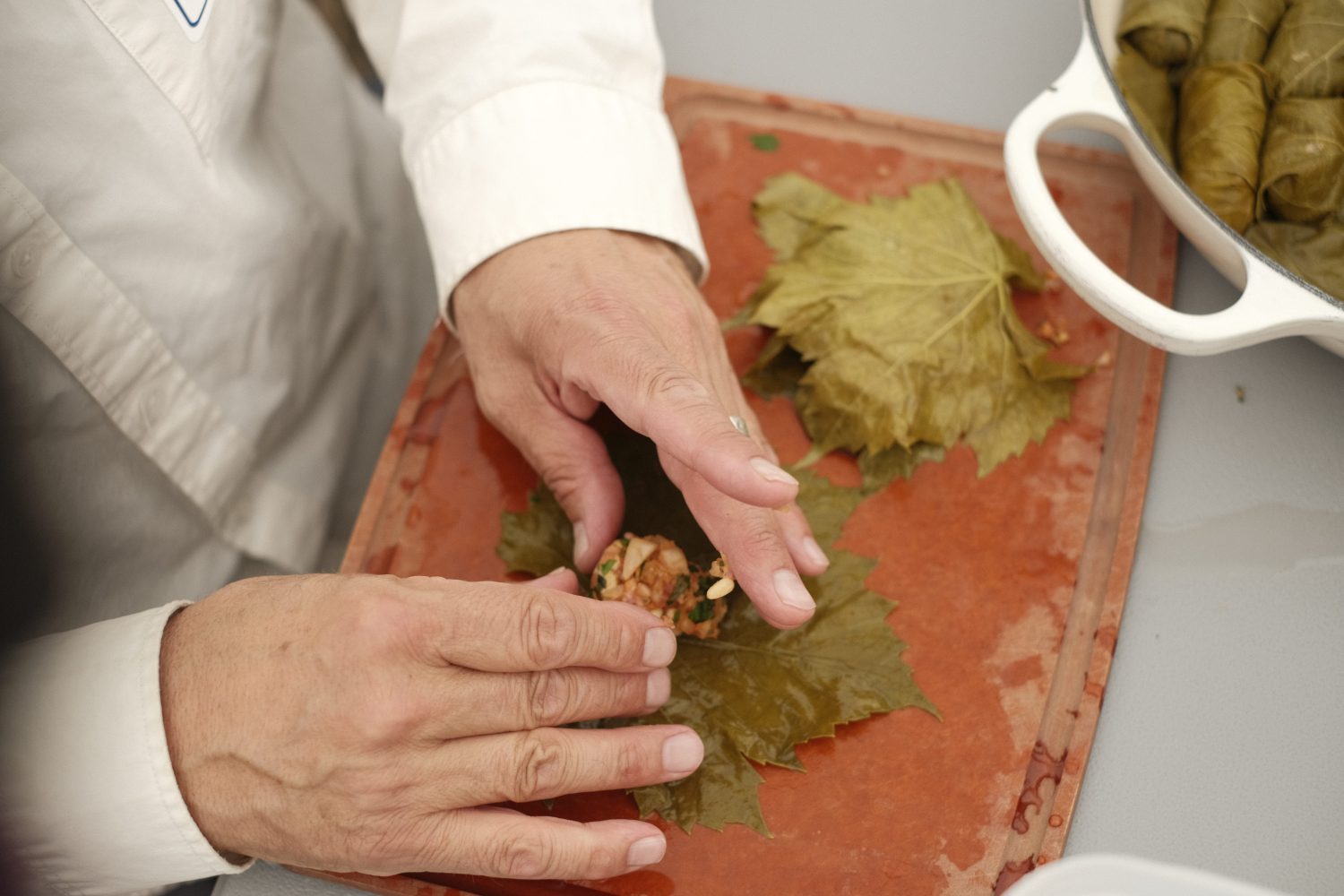
A Last Ditch workshop participant rolling a dolma from a fermented grape leaf, photo by Jon Plaza
And then there are the bitter tonics that were always intended as medicines. From the vermouths and aperitivi to open the appetite, to the amaros and digestivos to support digestion and sleep: wine-based medicines that can be made with endless combinations of plant and mushroom allies that support health and well-being in myriad ways.
Even the tinctures I’ve learned to make as an herbalist, something we may not think are connected, can be extracted in distillations of wine made into brandy or neutral grape grain spirits. Before distillation made higher-proof ethanol available in the medieval era, wine or vinegar was the menstruum medicine makers used for tincturing a plant.
And yet, this profoundly medicinal plant is also deeply entangled with a ruthless Western colonial history. The spread of vineyards westward across Europe, beginning more than two millennia ago, followed Greek and then Roman conquest (Unwin 1991). This pattern continued as European colonists made their way to North and South America, South Africa, Australia, and New Zealand (Regan-Lefebvre 2022). And the arrival of Vitis vinifera in New Mexico, nearly four centuries ago, is yoked to these same violent colonial histories (Knaut 1995).
These colonial and military histories continue to shape contemporary viticulture and winemaking practices today.
Vitis vinifera, the domesticated grapevine native to the Southern Caucasus and Western Asia and introduced throughout the European continent, produces the cultivars like Pinot Noir, Cabernet Sauvignon, and Chardonnay that most wine drinkers are familiar with. Vitis vinifera is not well adapted to grow in North America. Because of diseases like phylloxera, originating in North America and that began to spread globally starting in the mid 19th century and continue to do so, almost everywhere Vitis vinifera is planted now including in Europe, it requires grafting on American grapevine rootstocks and intensive chemical inputs to keep it alive (Gale, G., 2011).
When European colonists arrived in North America with their Vitis vinifera vines in tow, they encountered dozens of distinct grapevine species endemic to almost every corner of North America. Species like Vitis arizonica, Vitis labrusca, and Vitis riparia, that were and continue to be important for food and medicine, cordage and basketmaking, and also used in ceremony by North American tribes (Moerman 1998, 598–600). These grapevine species began to hybridize with Vitis vinifera and have also been intentionally crossbred to create grapevine species that are naturally resistant to fungal diseases, are cold-hardy, and require little or no chemical sprays to remain healthy.

A wild Vitis arizonica vine in Cave Creek Canyon, Arizona
One reason for that gap in understanding: after decades of growing and working with hybrid grapevines as a response to the phylloxera epidemic, European countries began to outlaw hybrid grape species in the 1930s in favor of grafting. These efforts were predominantly led by phyto-eugenicists affiliated with the Nazi and Fascist parties and these prohibitions continue in some European countries today. The outlawing of these hybrid grapes, known in Europe as direct producers specifically because they required fewer chemical inputs and less labor to grow and maintain, was met with tremendous resistance from the farmers themselves, many affiliated with Communist Party (ARCHE NOAH 2016).
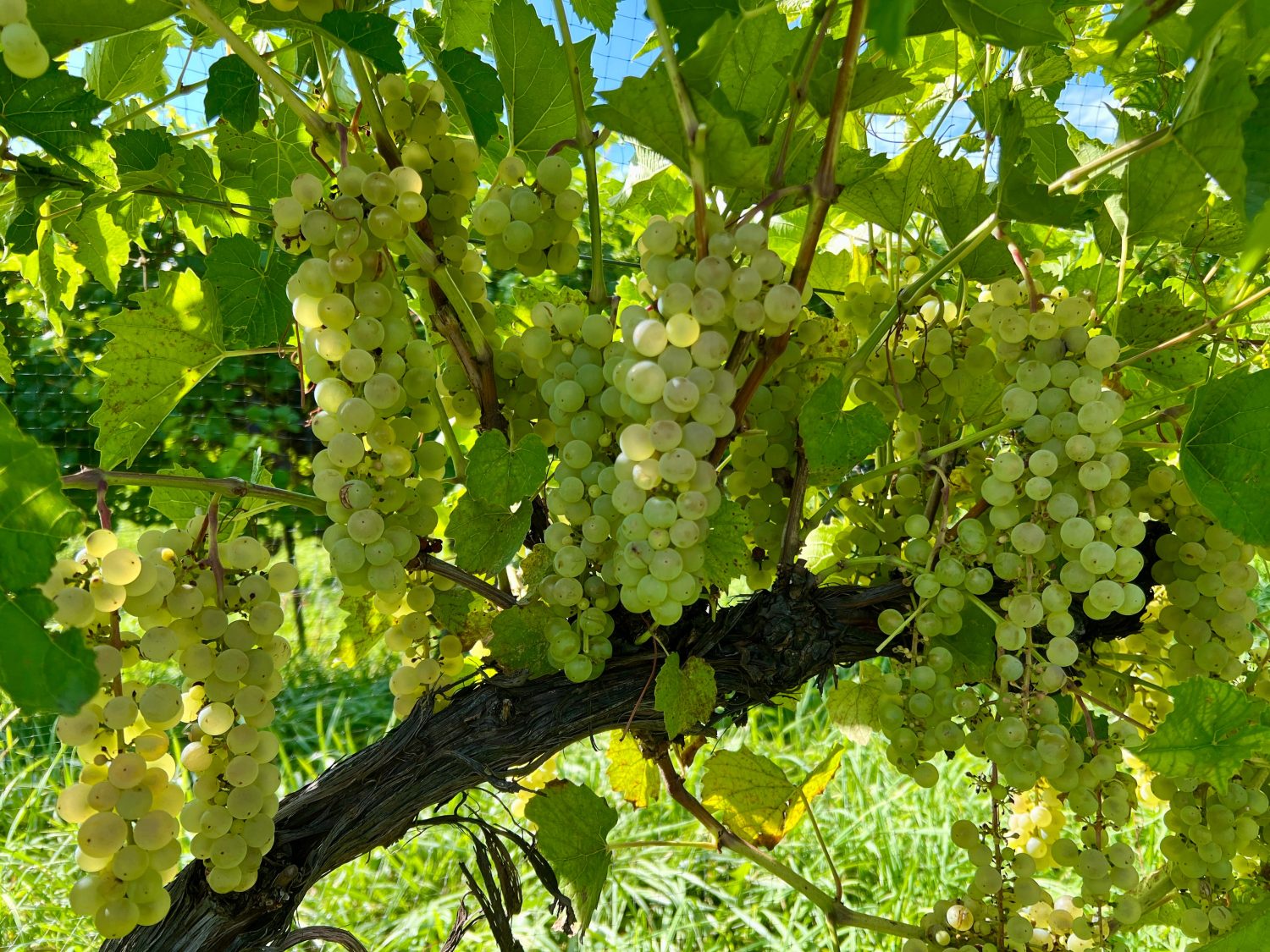
Aurore, a complex French-American hybrid grape species developed by French viticulturist Albert Seibel in the early 20th century and photographed here in 2024 at La Cienega Vineyard
These laws have fueled climate and cultural harms that, in light of our current ecological crises—among them the mass decline of insects, driven substantially by agricultural pesticides (Sánchez-Bayo and Wyckhuys 2019), and the direct poisoning of people living near vineyards—are worthy of reexamination and revision.
Today there is a growing cohort of forward-thinking American, European, and Japanese viticulturists and winemakers embracing hybrid and pilzwiderstandsfähig (fungus resistant) vine species, growing and making gorgeous organic and biodynamic wines in low-intervention ways—with low to no chemical sprays or inputs in both the vineyard and the wines and who use endemic microbiology, ambient yeasts naturally found on the surface and stems of the grapes, in lieu of lab-cultivated, factory farmed yeasts.
A bumper sticker on a bulletin board in a the kitchen overlooking La Cienega Vineyard
For the wine lover who wants to drink ecologically-grounded, low-intervention wine made with ambient yeasts, and support growers working with vines that include North American grape genetics, they can order wine directly from producers like La Garagista in Vermont, North American Press in California, who also sometimes has wines in stock from the 280 Project, Marzae in New England, and so many others.
Unfortunately, the majority of wine being produced in New Mexico maps to the broader industrialized wine market, conventionally grown and produced from the European species of grapevine Vitis vinifera. Lack of transparency in the wine industry generally, means the onus is on the consumer to do their research and determine if a grower or producer is working in a way that aligns with their values.
There are some local producers who are making wine from hybrid grapes grown in New Mexico, but in conventional ways using commercially-grown yeasts, fining and filtration, and sulfur dioxide (SO2) additions. Although Albuquerque-based wine producer Polychrome predominantly makes wines from European grape species, their 2024 Marquette is probably New Mexico’s first commercially available wine made in a low-intervention way with hybrid grapes.
I’m hoping more growers and producers here will transition to organic hybrid viticulture, and low-intervention wine production methods, for the sake of keeping New Mexico’s ecologies, water systems, and people healthy.
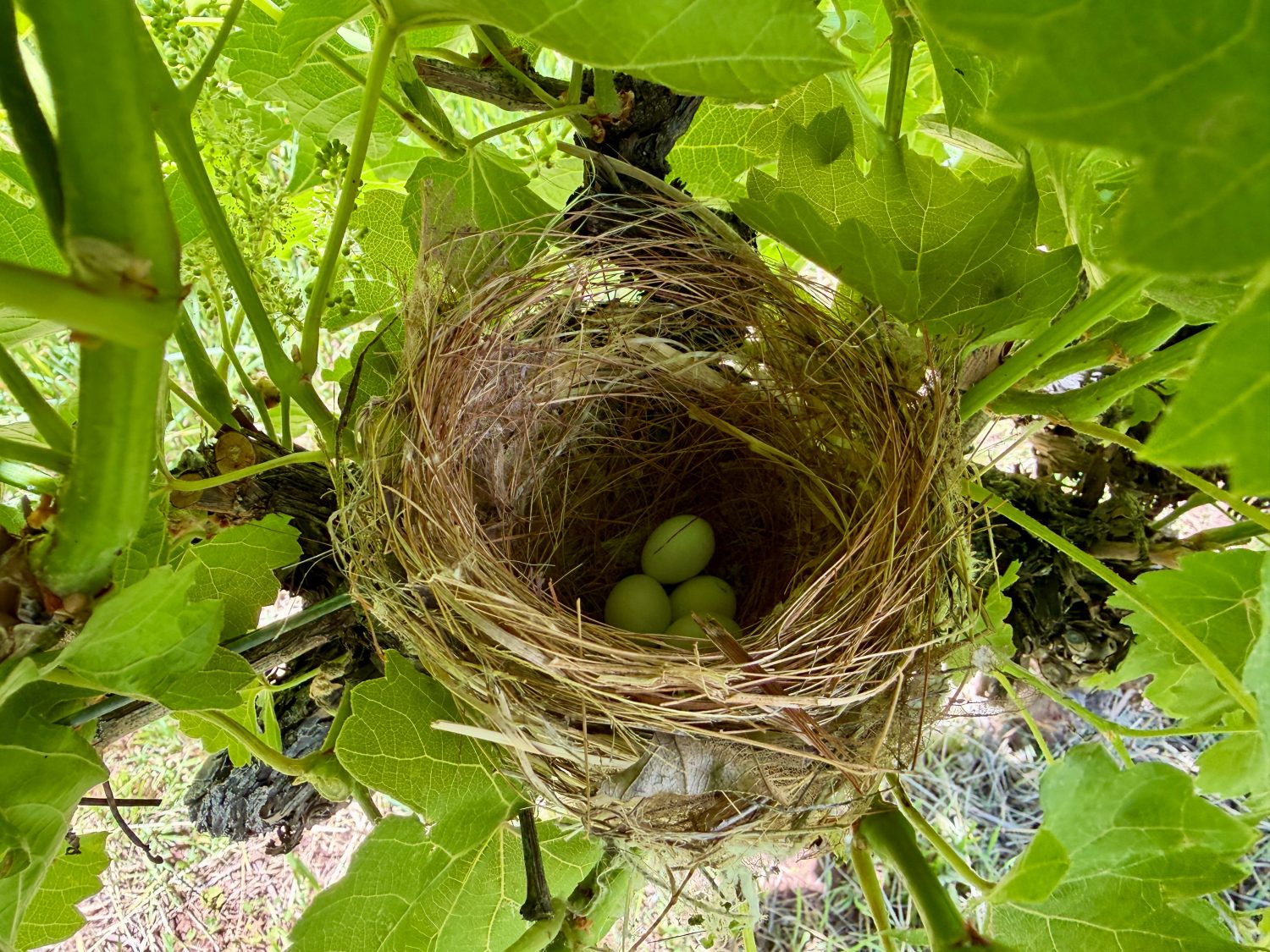
A Blue Grosbeak’s nest spotted this past summer in La Cienega Vineyard. Vineyards are important nesting areas for local and migratory bird species
Through the grape farming and wine making collective I co-founded and co-organize called Last Ditch, we organically tend vineyards with sixteen different multi-species hybrid grapevines, inclusive of North American genetics, and some of our members make and enjoy low-intervention wine from these vines. If you’re based in Northern New Mexico and are interested in learning more about hybrid viticulture and low-intervention winemaking, our workshops and work parties are open to the public and take place in vineyards and cellars in and around Santa Fe, New Mexico.

A Last Ditch community harvest party in the fall of 2025, photo by Allison Ramirez
And if you’re interested in learning more about the natural history of the grapevine, ecologically sound futures for viticulture and wine, or want to deepen your own relationship to wine-as-medicine, I’d like to invite you to join my class, Returning to the Medicine of the Grapevine: Exploring Herbal Wines and Vinegars, happening Saturday April 24, 2027 (10am-1pm) live online.

Last Ditch workshop participants learning how to use gravity to bottle wine, photo by David Dunlop
All photos by Brook Brooks unless otherwise noted.
Bibliography
ARCHE NOAH. Forbidden Fruits: The Fabulous Destiny of Noah, Othello, Isabelle, Jacquez, Clinton and Herbemont. Brussels and Vienna: ARCHE NOAH, April 2016. https://www.arche-noah.at/media/arche_noah_study_-_forbidden_fruits.pdf.
George Gale, Dying on the Vine: How Phylloxera Transformed Wine (Berkeley: University of California Press, 2011).
Daniel E. Moerman, Native American Ethnobotany (Portland, OR: Timber Press, 1998), 598–600.
Francisco Sánchez-Bayo and Kris A. G. Wyckhuys, “Worldwide Decline of the Entomofauna: A Review of Its Drivers,” Biological Conservation 232 (2019): 8–27. https://doi.org/10.1016/j.biocon.2019.01.020.
Knaut, Andrew L. The Pueblo Revolt of 1680: Conquest and Resistance in Seventeenth-Century New Mexico. Norman: University of Oklahoma Press, 1995.
Ornelas-Higdon, Julia. The Grapes of Conquest: Race, Labor, and the Industrialization of California Wine, 1769–1920. Lincoln: University of Nebraska Press, 2023.
Regan-Lefebvre, Jennifer. Imperial Wine: How the British Empire Made Wine’s New World. Oakland: University of California Press, 2022.
Unwin, Tim. Wine and the Vine: An Historical Geography of Viticulture and the Wine Trade. London: Routledge, 1991.
Brrok Brooks is the co-founder and co-organizer of Last Ditch, a grape and farming collective in Santa Fe, NM that seeks to reconnect people to the grapevine, and to each other through collective seasonal work and education in the vineyard and cellar.